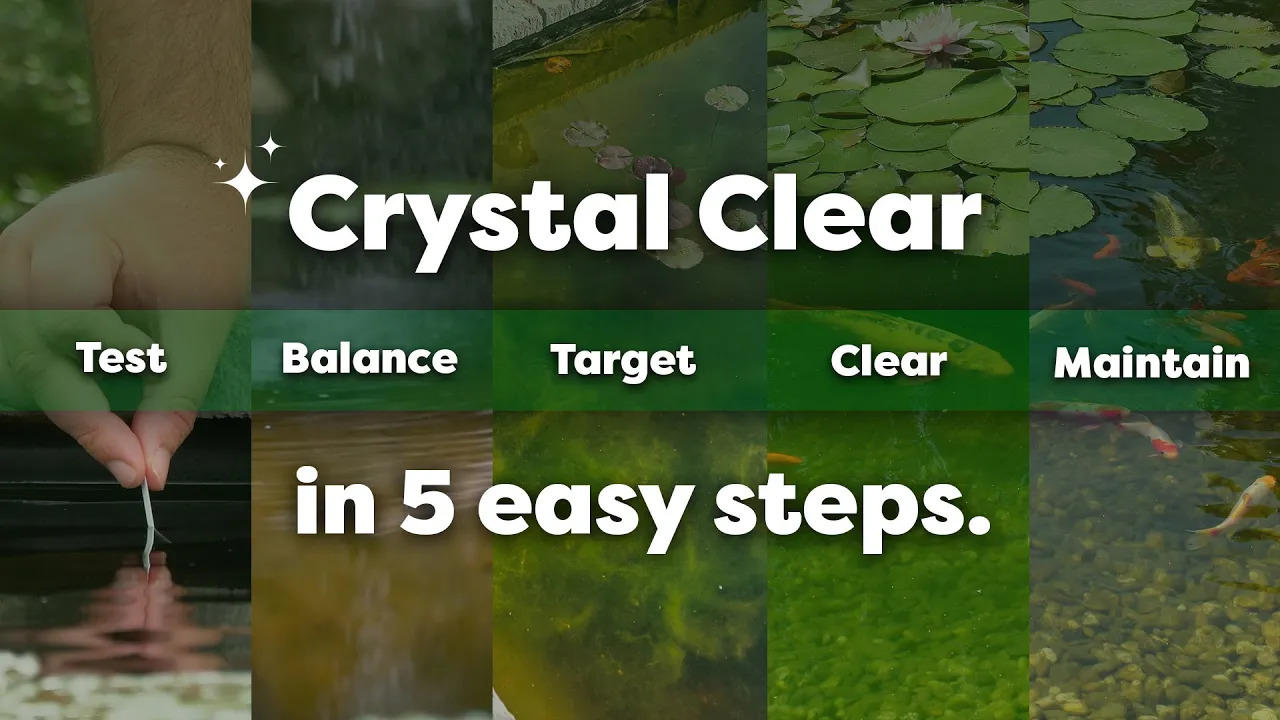
If your pond has suddenly turned green, developed string algae, or become covered in blanket weed, it can feel overwhelming trying to work out where to start.
Many pond owners jump straight to treating the visible problem, but the real cause often starts with the water itself. That’s why the best approach is to follow a simple step-by-step routine rather than guessing.
Below, we’ll walk through the key checks and treatments to help you identify what’s going wrong, fix the issue properly, and reduce the chances of it coming back.
Step 1: Test Your Pond Water Parameters
Before treating algae, blanket weed, green water, or any other pond problem, the first step should always be testing your water.
This is one of the most important parts of pond care, but it’s also one of the easiest to skip. If your water parameters are out of balance, pond treatments may not work as effectively as expected.
The five key water parameters to check are:
- pH
- KH
- GH
- Nitrites
- Nitrates
These parameters can be testing using the envii Pond Test Strips.
The main one many pond owners are familiar with is pH, which tells you how acidic or alkaline your pond water is. Ideally, your pond pH should sit somewhere around 7.5 to 8.5.
Why Water Parameters Matter
Balanced water creates a healthier environment for fish, plants, wildlife, and beneficial bacteria.
If your pH, KH, or GH readings are too far out, this can make the pond unstable and harder to treat. It may also be one of the reasons why previous treatments haven’t delivered the results you hoped for.
What to Do If pH, KH, or GH Are Out of Balance
If your pH, KH, or GH readings are outside the ideal range, the next step is to stabilise them before treating anything else.
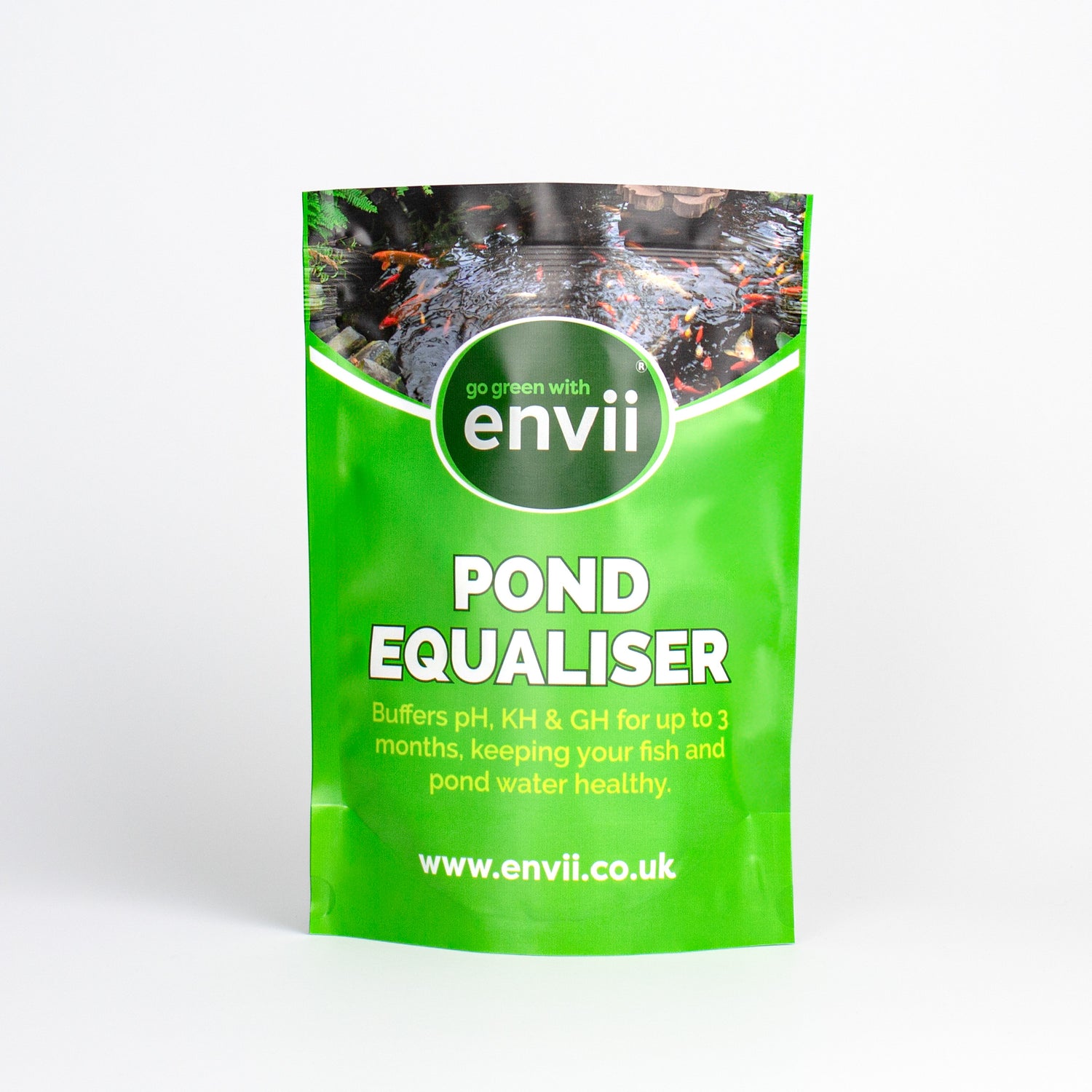
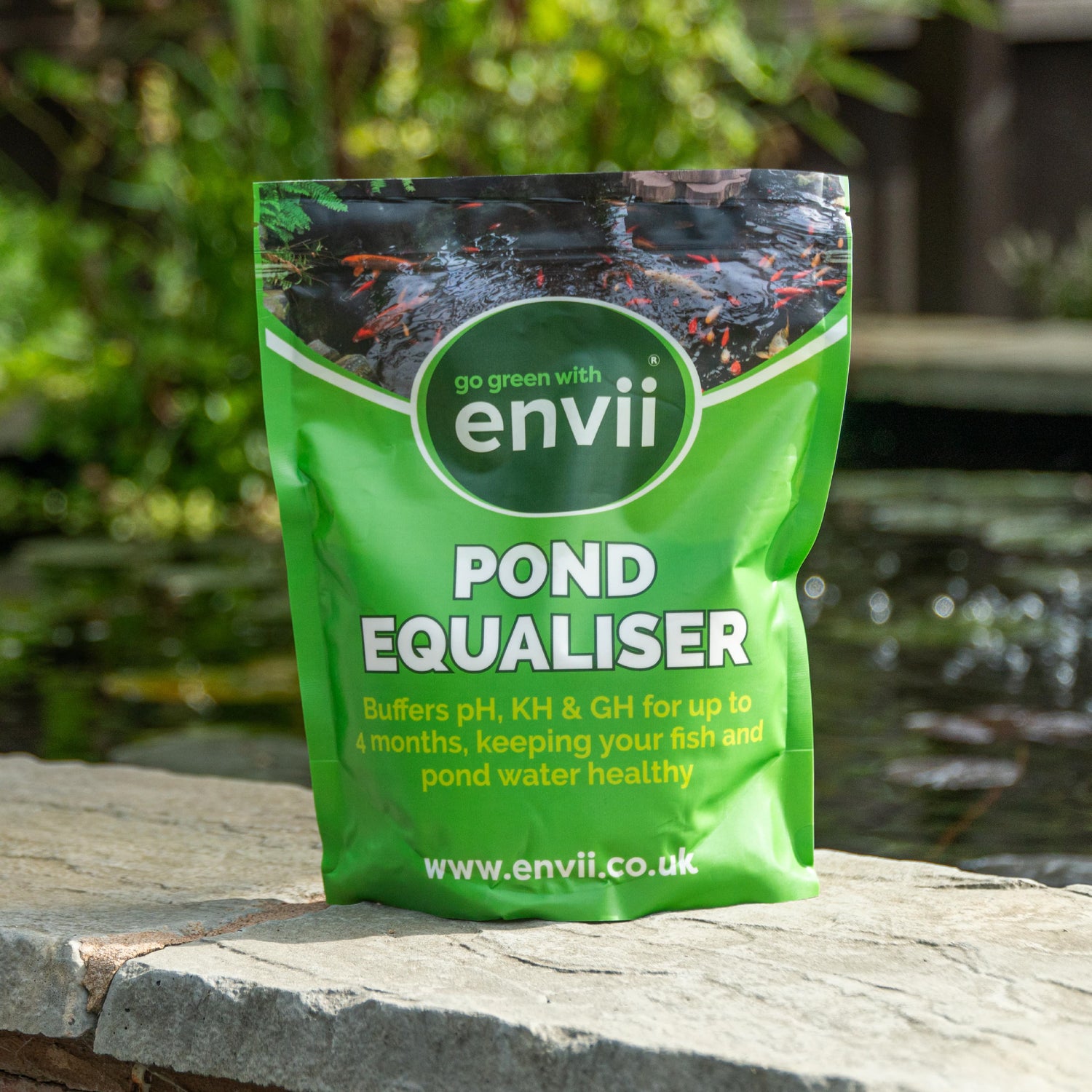
This is where a treatment such as Pond Equaliser can help. It works by buffering these key water parameters and helping bring them back to where they need to be.
This step should come before treating algae, green water, blanket weed, or nitrate problems, because balanced water gives you a much better foundation to work from.
Step 2: Check Nitrites and Nitrates
Once your pH, KH, and GH are under control, the next readings to check are nitrites and nitrates.
These are especially important if you have fish, because high levels can become dangerous if left untreated.
Nitrites and nitrates can build up from things like:
- Fish waste
- Uneaten food
- Decaying organic matter
- Sludge
- Dead algae or plant material
Testing once a week is a simple habit that can make a big difference. It only takes a minute, but it helps keep your pond safer for fish and wildlife.
What to Do If Nitrates Are High
If your nitrate or nitrite readings are too high, deal with this before moving on to algae or blanket weed treatments.
A product such as Nitrate Klear can help reduce nitrates using beneficial bacteria. These bacteria break down excess nutrients in the water, helping improve overall pond health.
This step is important because algae and blanket weed can absorb nitrates. If you kill large amounts of algae while nitrate levels are already high, those nutrients may be released back into the water, which can create further problems and potentially become dangerous for fish.
Step 3: Treat Submerged String Algae
Once your water parameters are balanced and nitrates are under control, you can move on to treating visible algae problems.
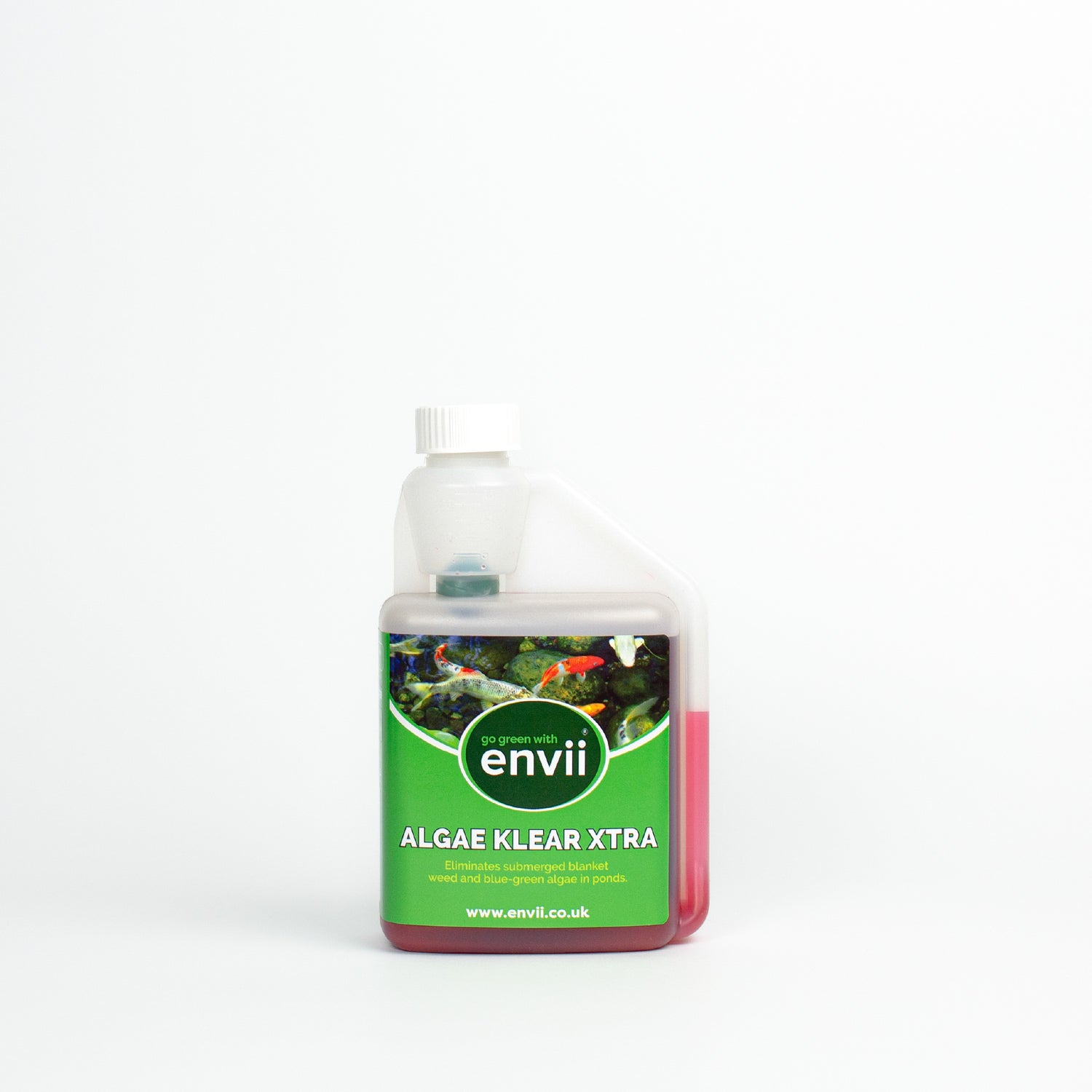
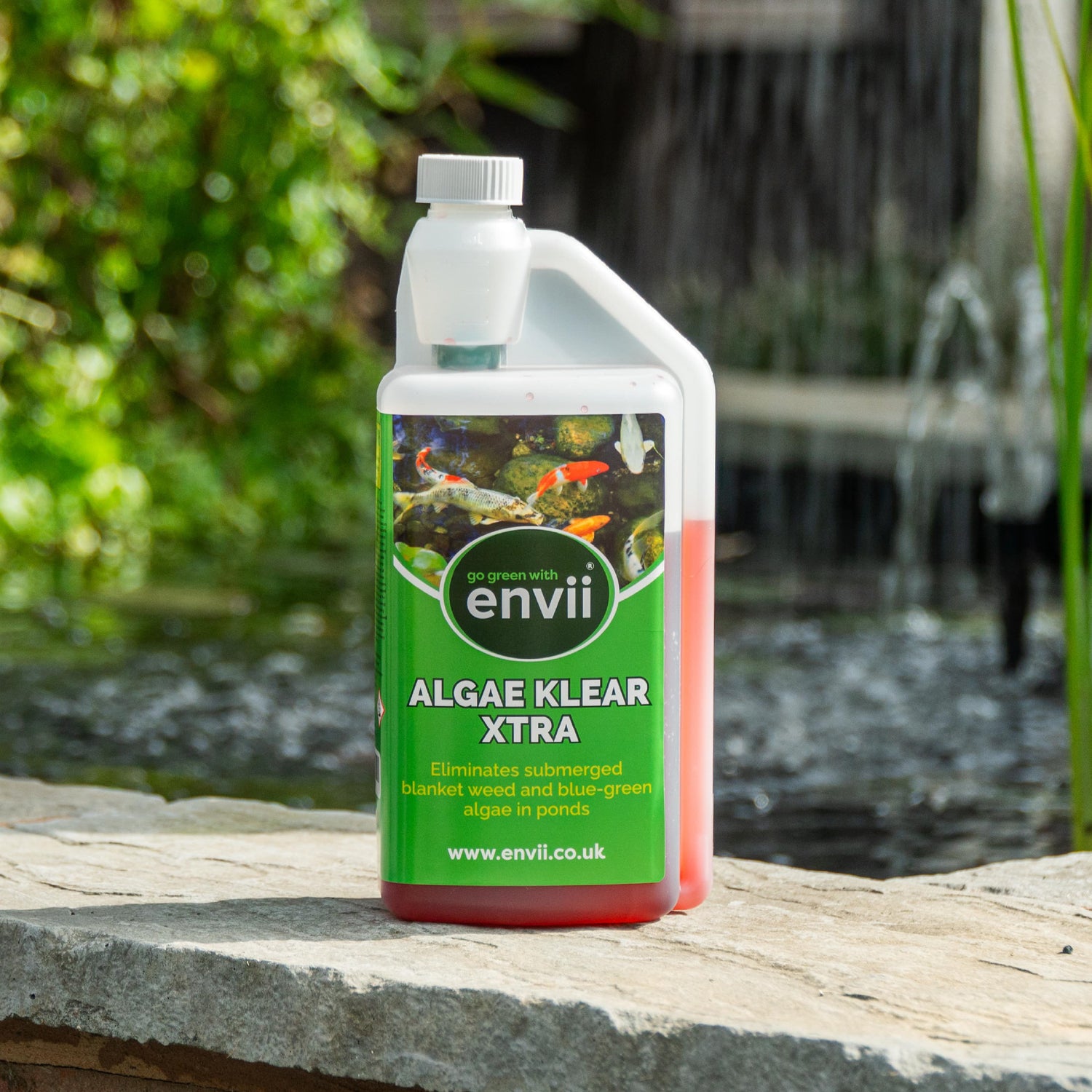
If you have string algae growing under the surface of the water, attached to the pond sides, pumps, plants, liner, or other submerged surfaces, this is where Algae Klear Xtra is the most suitable treatment.
This type of algae is different from floating blanket weed, so it’s important to choose the right product for the right problem.
How to Use Algae Klear Xtra
Use pond water rather than tap water when mixing or applying treatments, as this avoids adding chlorine into the pond.
Apply the correct dose around the pond, allowing it to circulate through the water. For Algae Klear Xtra, the general dose is 50ml per 1,000 litres of pond water.
Repeat the treatment every seven days, especially for the first two to three weeks, until the algae has cleared.
Once the algae has gone, you can stop treatment, but keep an eye on the pond in case it begins to return.
Step 4: Treat Floating Blanket Weed
If your problem is not submerged string algae but floating blanket weed, you’ll need a different approach.
Floating blanket weed often sits on the surface of the pond and can spread across the water like a thick green carpet. For this type of problem, Blanketweed Klear is more suitable.
This is applied directly to the affected areas, especially around the edges where blanket weed is easiest to reach.
How to Know It’s Working
After treatment, floating blanket weed will usually start to die back within 24 to 48 hours.
You’ll know it’s working when the blanket weed turns brown. This shows that it has died and can begin breaking down.
Can You Treat String Algae and Blanket Weed Together?
Yes, if you have both submerged string algae and floating blanket weed, both treatments can be used together.
However, it’s best to apply Algae Klear Xtra first, then wait 24 hours before applying Blanketweed Klear.
This gives the first treatment time to circulate properly before adding the second.
Step 5: Treat Green Water
Green water is one of the most common pond problems, especially during warmer months or when nutrient levels are high.
Unlike string algae or blanket weed, green water is caused by microscopic algae suspended in the water. This gives the pond that pea-soup appearance and can make it difficult to see fish or plants below the surface.
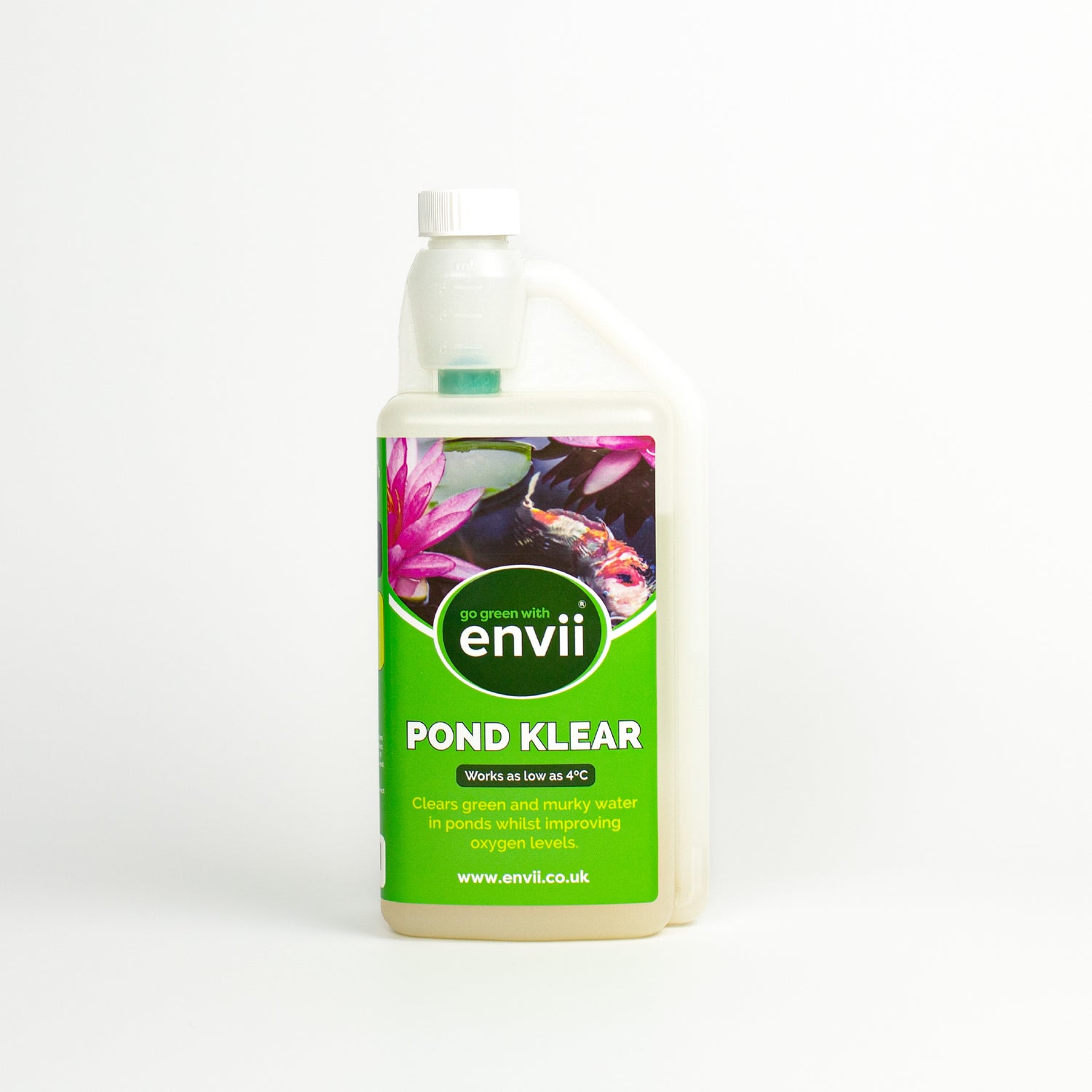
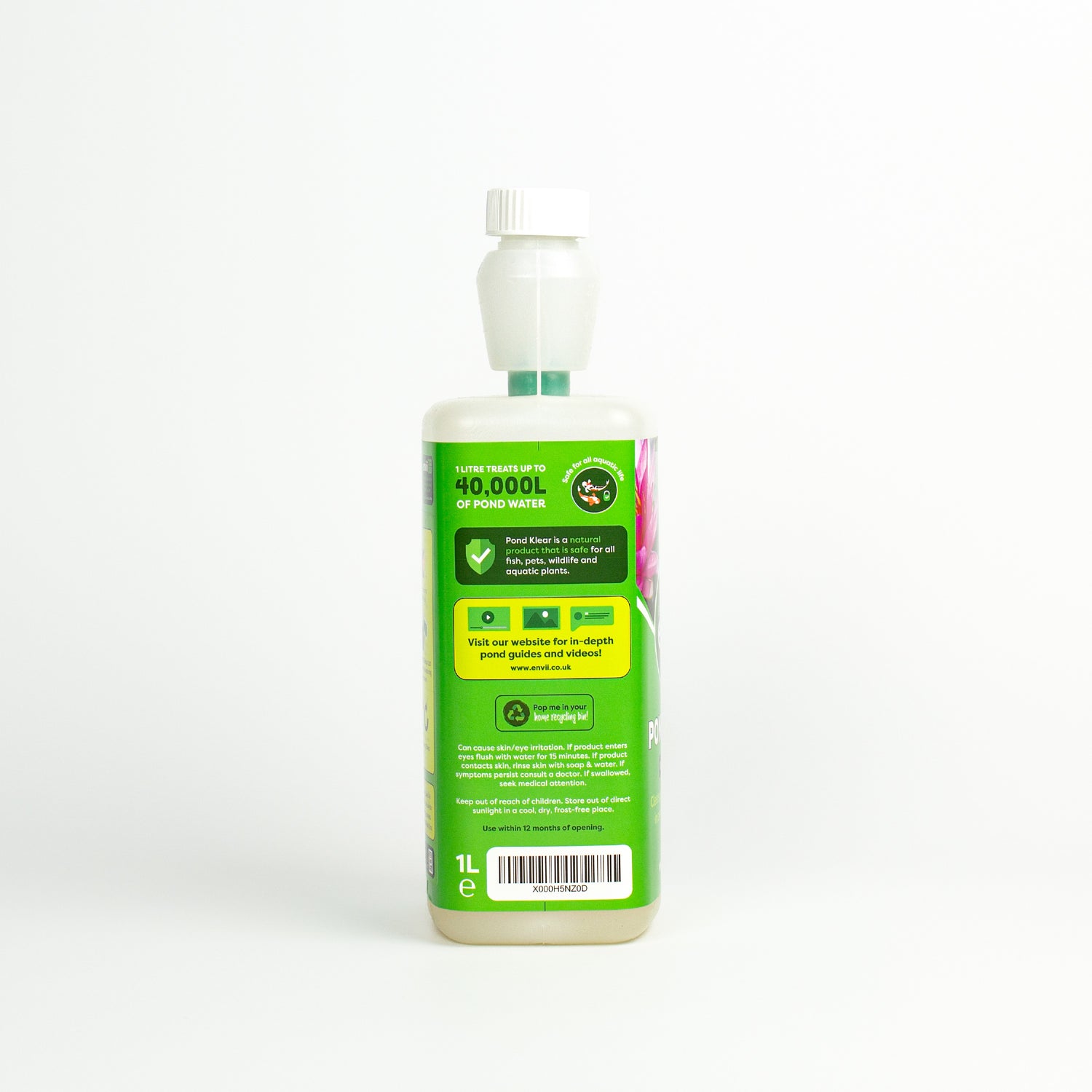
For this, a bacterial pond treatment such as Pond Klear or Pond Klear Xtra can help clear green and murky water.
Pond Klear vs Pond Klear Xtra
Both products are designed to clear green water, but Pond Klear Xtra contains a higher concentration of bacteria.
This makes it a stronger option, especially for larger ponds or more persistent problems.
Used weekly, these treatments help reduce the excess nutrients that feed green water and algae. They can also support the overall biological health of the pond.
Can You Treat Green Water and Algae at the Same Time?
If your pond has both green water and string algae, you can use Pond Klear or Pond Klear Xtra alongside Algae Klear Xtra.
Again, leave 24 hours between treatments.
These products can actually complement each other, because reducing nutrients in the water helps limit the food source that algae relies on.
The Best Routine for Fixing Pond Problems
The key is to follow the right order:
- Test your water parameters
- Balance pH, KH, and GH if needed
- Treat nitrites or nitrates before algae
- Treat submerged string algae
- Treat floating blanket weed
- Treat green water
- Maintain the pond weekly to prevent problems returning
This routine helps you avoid wasting time and money on treatments that may not work properly if the underlying water quality is poor.
The Takeaway
When your pond develops green water, algae, or blanket weed, it’s tempting to treat the visible problem straight away. But the best results come from starting with the water itself.
Test your pond first, correct any imbalances, deal with nitrates, and then choose the right treatment for the specific problem you’re facing.
By following a simple step-by-step routine, you’ll give your pond the best chance of becoming clearer, healthier, and easier to maintain throughout the season.