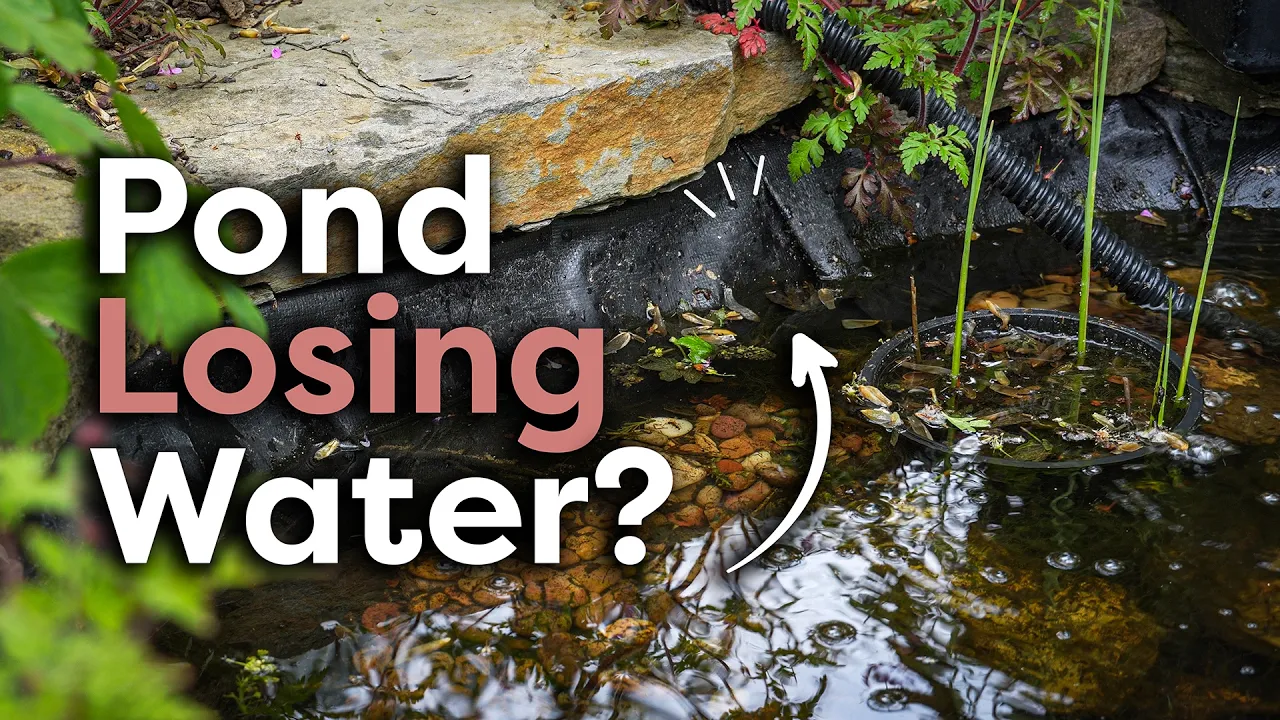
If you have noticed the water level in your pond suddenly dropping, it is easy to assume the worst and start worrying about a damaged liner or serious leak.
However, water loss does not always mean your pond is leaking. In many cases, the cause is something much simpler, such as warm weather, splashing water or a problem with the pump and filter system.
Before pulling your pond apart, work through these seven common reasons why a pond may be losing water.
Reason 1: Natural Evaporation
Evaporation is one of the most common causes of falling pond water levels, especially during warm, sunny or windy weather.
Heat causes water to evaporate from the surface, while wind carries the moisture away and speeds up the process. This can be particularly noticeable in smaller or shallower ponds, where even a relatively small amount of water loss can make the level appear to have dropped dramatically.
How to Check
Monitor the pond level over several days and compare it with the weather conditions.
A slow, steady drop during a period of warm, dry or windy weather is likely to be caused by evaporation rather than a leak.
What to Do
Top up the pond when necessary and consider adding floating plants to provide some shade during particularly hot weather.
Reason 2: Plants Are Drawing Water Out
Aquatic plants naturally use water as they grow, but plants around the outside of the pond can sometimes cause more noticeable water loss.
Leaves, stems or roots that trail from the pond into the surrounding soil can act like a wick. Water travels along the plant material and escapes over the pond edge.
How to Check
Inspect the entire edge of the pond and look for:
-
Trailing stems or leaves
-
Plant roots growing across the liner
-
Moss or vegetation bridging the water and surrounding soil
-
Overgrown marginal plants leaning over the pond edge
What to Do
Trim back any plants that are trailing out of the water and remove vegetation that is creating a bridge over the pond edge.
Reason 3: Fountains and Water Features Are Splashing
Fountains, waterfalls and other moving water features can gradually splash water outside the pond.
The amount lost at any one time may seem insignificant, but it can quickly add up when the feature runs for several hours each day.
Splashing may become worse if:
-
The water flow is too powerful
-
A fountain head has moved
-
A rock within a waterfall has shifted
-
Water is landing too close to the edge
-
Wind is blowing the spray outside the pond
What to Do
Watch the water feature while it is running and check whether any water is landing outside the pond.
Adjust the flow rate, reposition the fountain or move any rocks that are directing water towards the edge.
Reason 4: The Pump, Filter or Pipework Is Leaking
Sometimes the pond itself is not leaking at all. The water may be escaping somewhere within the circulation system.
Possible causes include:
-
Loose hose connections
-
Cracked pipework
-
Damaged fittings
-
A leaking filter box
-
An overflowing filter
-
Blocked or clogged filter media
How to Check
Inspect the ground around the pump, pipes and filter for damp patches or running water.
You can also monitor whether the water level falls more quickly while the pump is operating. If it does, the problem is likely to be within the pump, filter or pipework rather than the pond liner.
Reason 5: The Pond Liner Is Damaged
If the water level repeatedly drops to the same point and then stops, this can help you locate a possible liner leak.
Once the water falls below the damaged area, it can no longer escape, which is why the level stabilises.
How to Check
Allow the water level to fall naturally and mark the point where it stops.
Carefully inspect the liner around this waterline, paying particular attention to:
-
Folds and creases
-
Corners
-
Areas around rocks or baskets
-
Pipe entries
-
Exposed sections of liner
Small punctures can often be repaired using a suitable pond liner repair kit without replacing the entire liner.
Reason 6: The Pond Edge Has Sunk or Shifted
Over time, the soil around a pond can settle, causing part of the pond edge to become lower than the rest.
Water may then overflow across this low point and soak into the surrounding ground. This can look like a liner leak, even though the liner itself is undamaged.
How to Check
Walk around the pond and compare the water level with the top of the liner.
Look for damp ground, soft soil or an area where the liner sits lower than the rest of the pond edge.
What to Do
Lift and support the affected section using compacted soil, sand or another suitable material. Make sure the liner is raised evenly and securely before replacing any stones or edging.
Reason 7: Wildlife Is Disturbing the Pond
Birds and other animals may drink from the pond, bathe in it or disturb the pond edges.
Wildlife is unlikely to cause a major drop in a large pond, but it can contribute to water loss in a small container pond or shallow wildlife pond.
Animals may also move stones, damage plants or push part of the liner down, creating a low point where water can escape.
What to Do
Check for disturbed stones, flattened plants or muddy areas around the pond edge.
Reposition anything that has moved and make sure animals have a safe, gently sloping area where they can drink without damaging the pond.
How to Top Up Your Pond Safely
Once you have identified and corrected the cause, you can safely restore the pond to its normal water level.
Using Rainwater
Collected rainwater is usually the best option for topping up a pond because it does not contain the chlorine or chloramines commonly found in mains tap water.
Water collected in a water butt can be treated with Envii Water Butt Klear to introduce beneficial bacteria and help keep stored rainwater clean and healthy.
Using Tap Water
Tap water can also be used, but it should be treated with a pond-safe dechlorinator first.
Envii Chlorine Klear removes chlorine and chloramines from tap water, helping to make it safe for fish, plants and the beneficial bacteria living within the pond and filter.
Add the water gradually where possible, particularly if you are replacing a significant amount.
The Takeaway
A falling pond water level does not automatically mean you have a serious leak.
Start by checking the most common causes:
-
Evaporation
-
Trailing plants
-
Splashing water features
-
Leaking pumps, filters or pipes
-
Liner damage
-
Low or sunken pond edges
-
Wildlife activity
Working through these checks methodically will help you identify the source of the water loss without unnecessarily draining or dismantling the pond.
Once the problem has been corrected, top the pond up using collected rainwater or properly treated tap water to keep conditions safe for fish, plants and other pond life.