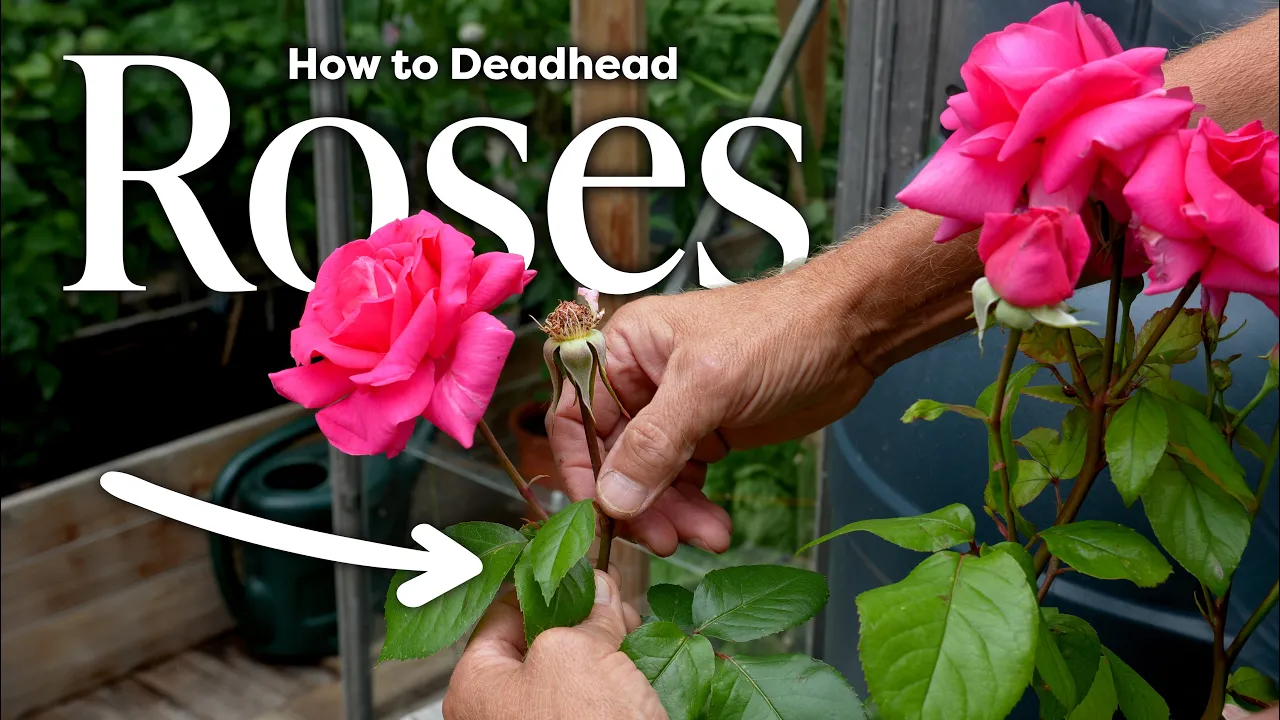
As roses begin to fade during summer, you have a choice: remove the spent blooms to encourage more flowers or leave them to develop into rose hips. The best approach depends on the type of rose you're growing and what you'd like from the plant later in the season.
Why Deadhead Roses?
Deadheading simply means removing flowers once they've finished blooming. On repeat-flowering roses, this can encourage the plant to produce fresh flower stems rather than putting its energy into developing seed-filled rose hips.
For compact bush or standard roses that you want to keep flowering, regular deadheading is a useful part of summer maintenance.
Removing Individual Spent Flowers
If a cluster still contains healthy flowers, there's no need to remove the entire flowering stem just because one bloom has faded.
You can take off the spent flower on its own. As shown in the video, gently bending the old flower head backwards at its attachment point can sometimes allow it to snap away cleanly without needing secateurs.
This keeps the remaining flowers on display while tidying up the plant. If the flower doesn't come away easily, use clean, sharp secateurs instead.
Pruning Back a Finished Flowering Stem
Once all the flowers on a stem have finished, follow the stem down to a healthy leaf with five leaflets. This is a useful guide when looking for a strong point to prune back to.
Make a clean cut just above a suitable leaf joint, angling the cut slightly away from the bud. New growth can then develop from the bud below the cut and, on repeat-flowering varieties, may produce another flush of flowers.
Should You Deadhead Rambling Roses?
Rambling roses can be deadheaded too, but you may prefer to leave their spent flowers in place.
These flowers can develop into rose hips, which turn bright red or orange later in the season and add a lovely splash of autumn colour. The hips can also provide food for birds, making them a useful feature in a wildlife-friendly garden.
In the video, we've chosen to leave the hips on our rambler rather than remove every spent flower. This means sacrificing some tidiness now in return for colour and wildlife benefits later.
The Main Thing to Remember
Deadheading is most useful when you want to encourage another display of flowers on repeat-flowering roses. Remove individual faded blooms when other flowers are still looking good, or cut back a finished stem to a healthy leaf joint.
But if you're growing a rose for autumn hips or wildlife value, leaving some spent flowers in place can be just as worthwhile.